
Digital marketing has become an important part of how businesses attract customers, build their brands, and generate sales online. From search engines and social media to email marketing and paid advertising, businesses use multiple digital channels to reach their target audience.
If you are new to digital marketing, the number of tools, strategies, and terms can feel overwhelming. The good news is that you do not need to master everything at once. Learning the fundamentals and gaining practical experience can help you build a strong foundation. Here are some useful digital marketing tips for beginners to help you get started.
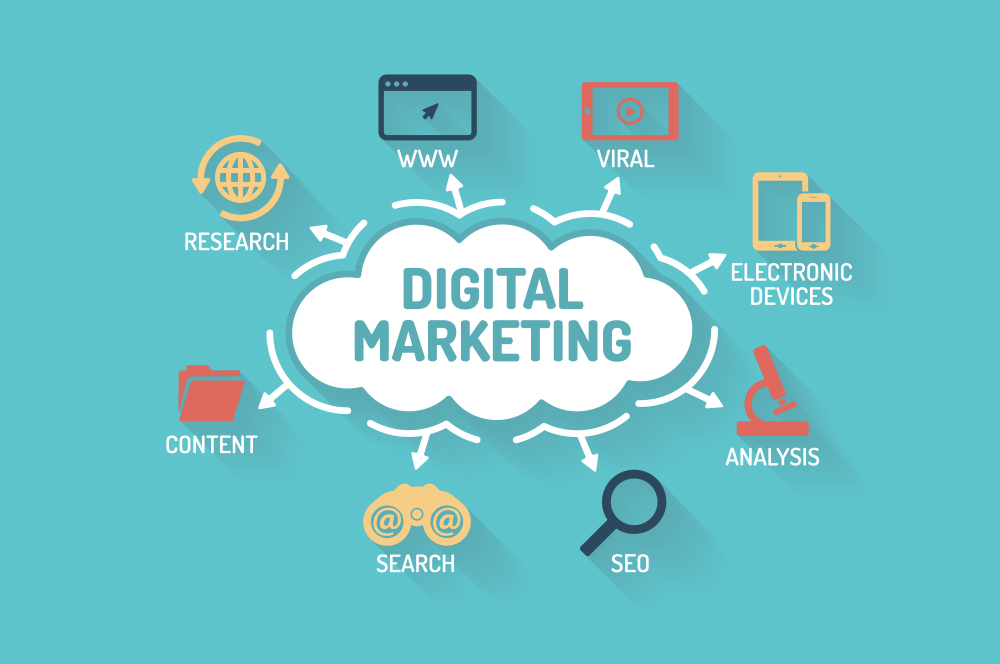
Digital Marketing Tips for Beginners
1. Understand the Basics of Digital Marketing
Before using advanced tools, understand what digital marketing actually includes. Some of the major areas are:
- Search Engine Optimization (SEO)
- Social Media Marketing
- Content Marketing
- Email Marketing
- Pay-Per-Click (PPC) Advertising
- Affiliate Marketing
- Influencer Marketing
- Analytics and Reporting
Each area has a different purpose. For example, SEO focuses on improving organic visibility in search engines, while social media marketing helps brands engage with audiences on platforms such as Instagram, Facebook, LinkedIn, and YouTube.
2. Start With SEO
SEO is one of the most useful skills for anyone starting a digital marketing career. Learn how search engines work and understand important concepts such as keyword research, search intent, on-page SEO, technical SEO, link building, and local SEO.
Instead of only memorizing SEO techniques, try applying them to a real website. Create pages, optimize titles and headings, improve internal links, and monitor performance through analytics and search tools.
Practical experience will help you understand how SEO works beyond theory.
3. Learn Content Marketing
Content is an important part of digital marketing. Businesses need useful content for websites, blogs, social media, emails, videos, and advertisements.
Start by learning how to create content based on your audience’s needs. Before writing an article or social media post, ask yourself: What problem does this content solve?
Focus on creating content that is useful, easy to understand, relevant, and aligned with search intent.
4. Build Your Social Media Skills
Social media platforms provide businesses with opportunities to build awareness and communicate directly with customers.
Learn how different platforms work and understand the type of content that performs well on each one. Practice creating captions, carousels, short-form videos, stories, polls, and educational posts.
Also learn basic social media analytics so you can understand metrics such as reach, engagement, impressions, clicks, and conversions.
5. Learn Keyword Research
Keyword research is an essential digital marketing skill, particularly for SEO and content marketing.
Start by identifying what your target audience searches for online. Look for relevant keywords based on search intent, competition, and business relevance.
Do not focus only on high-volume keywords. Long-tail keywords can sometimes be easier to target and may attract users with more specific needs.
6. Get Familiar With Analytics
Digital marketing is not just about creating content or running campaigns. You also need to understand whether your efforts are producing results.
Learn basic metrics such as organic traffic, click-through rate (CTR), conversion rate, engagement rate, bounce rate, and return on ad spend (ROAS).
Tools such as Google Analytics and Google Search Console can help beginners understand website performance and search visibility.
7. Practice With Real Projects
One of the best digital marketing tips for beginners is to gain practical experience as early as possible.
You can create a personal website, start a small blog, manage a social media page, or develop a mock marketing campaign for a fictional business. Experiment with SEO, content creation, social media, and analytics.
Real projects give you examples to discuss during interviews and help you understand how different marketing activities work together.
8. Keep Learning and Experimenting
Digital marketing changes frequently. Search algorithms, social media features, advertising platforms, AI tools, and consumer behavior continue to evolve.
Follow reliable industry resources, attend webinars, take practical courses, and experiment with new tools. However, avoid jumping from one trend to another without understanding the fundamentals.
Conclusion
Starting digital marketing can seem complicated, but learning one skill at a time makes the process much easier. Focus on the fundamentals of SEO, content marketing, social media, keyword research, analytics, and paid advertising, and combine your learning with practical projects.
The most important thing is to keep testing, measuring, learning, and improving. With consistent practice and a strong understanding of digital marketing basics, beginners can gradually develop the skills needed to work with businesses and build a career in the digital marketing industry.